Utah hunt

(October 16-24, 2019)

Even though we put in every year for the rifle mule deer hunt in southern Utah, it seems that we’ve gotten into a three year cycle of getting drawn…but not all together, which was a bummer this year. Paul, Brian and I were successful in the draw, but Kenny, Matt and Bob, were not. This year, our group would hunt “separately” for the most part. We arrived in the early afternoon at Red Creek Reservoir (7,800 ft), two days before opener. This year’s hunting plan was to hike up to “my meadow” (2+ miles, with nearly 2000ft of elevation gain ) and camp for at least two nights, with hopes of bagging a big buck opening day…or at least day two. img_20191020_095921520_hdrThis required a total of two full trips, the first being to carry up 6 gallons of water and our bear canister with 3 days worth of food (just in case). The next trip, our tent, sleeping bag and hunting gear/paraphernalia. Of course, each time up and back we saw deer (to include bucks), so we were excited.
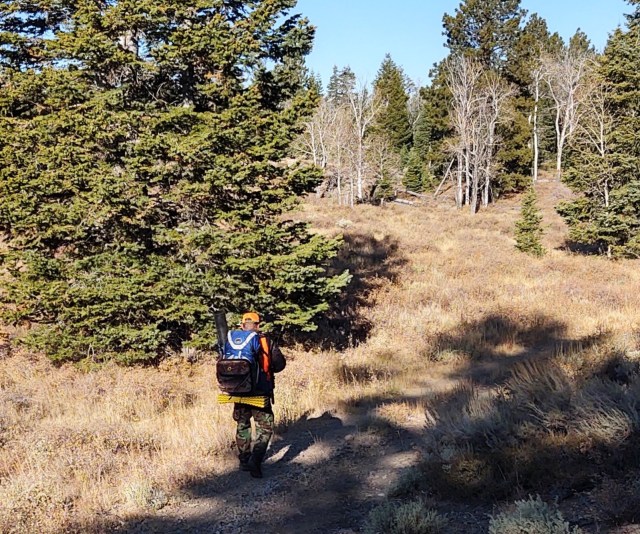
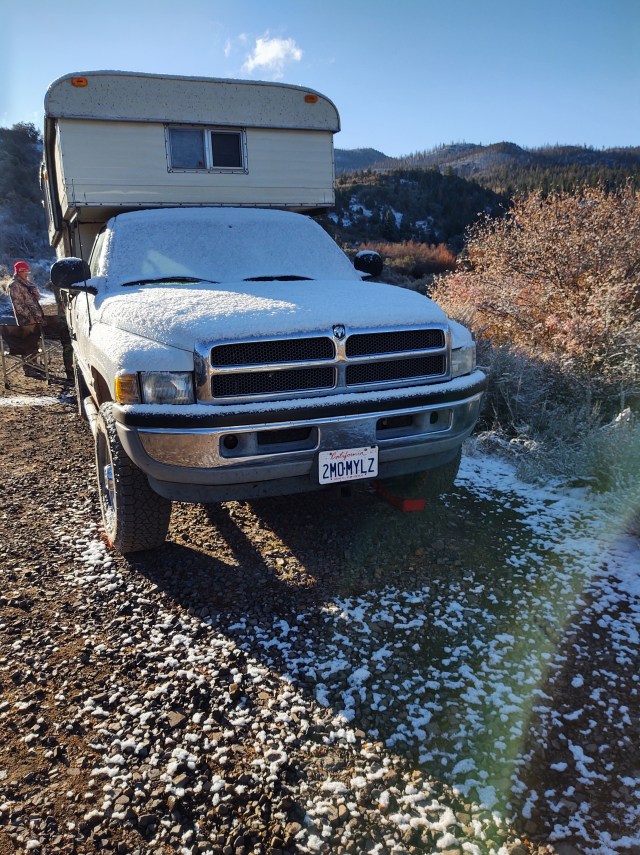
Brian, however would not be joining us in the meadow, but would hunt in another spot.  He would however, be in “earshot” and/or radio contact in the event that either of us required assistance.  Ideally, to haul in a big buck!  He would stay at “base camp” in his new camper, which based upon the dusting of snow we received the day before opener would be certainly warmer than the tent we would be using.  After a few unforeseen delays (…namely, Brian’s Ford diesel not wanting to start in the cold), we march up the “hill” early Friday afternoon, taking frequent breaks, to keep from sweating, as we know it will not be getting any warmer.

We set up camp with enough daylight to scout around…just a bit to decide where we will sit and glass opening morning. We are set up in a small clearing, surrounded by a layer of snow and a dense stand of narrow trees.  As we are at nearly 9600 ft in elevation, the temperature drops to a chilling 34 in no time, well before hiker midnight (9pm)! Paul set his alarm for an early rising, so as to be in place before the sun rises on this elevated plateau. After a fitfully cold night (24 degrees), Paul’s alarm was a welcome sound (I can’t believe I’m saying this!) We dressed quickly and headed out to our chosen spots, each with hopes (and expectations) of nailing a “monster buck”.  Remarkably, we had this place all to ourselves. In the still of the morning I rest my back against a fortuitously placed log and watch the edges of the forest for a deer (any deer) to step out into the warmth of the rising sun. My nose runs and my breath clouds before me, nearly obscuring my vision, as I exhale. I smile, noting that currently the gusting wind is working in my favor. But just as “prime time” breaks (that moment when the morning sun starts to paint the edges of the meadow), the wind shifts, and propels my scent directly to where I have been watching. Shit! I hoped that Paul was better situated. Turns out he wasn’t. Opening morning turned into a bust, and after sitting for an hour longer than we really needed to, we headed back to camp for breakfast. After breakfast, we decide to explore and search for fresh definitive deer sign(s), as opposed to the plethra of elk signs we had been seeing. We followed a well used game trail in hopes of reaching an upper isolated meadow that we have been jonesing over for years. We soon realise why this meadow (via Google Earth) is still isolated. The forest closed in quickly, becoming dense and steep as we wove our way toward the clearing. The snow became more frequent and deeper. This exploration became a bit of a workout.  We can not help but begin to sweat under the layers of our camo.  We find that no matter how carefully we carry our rifles, the muzzles (or butts) occasionally get caught on an outstretched branch, halting our progress and generally eliciting a profane word, or two. There is nothing quiet about our approach, and we realize the futility of this endeavor. While we know we would be set up well for an evening hunt at this isolated meadow, we also realize that we are not properly prepared.  As it would be an evening hunt, we would most likely have to spend the night, as it would be impossible to drag any sizeable animal (let alone our sorry asses) back to camp safely in the dark, and/or successfully through the tangle of trees we have threaded. This will have to wait for another year. Dejected, we turn back. In no time, however, we are thankful for our decision, as we discover that while making our way back from whence we came, even with daylight, it was almost more difficult than bushwacking our way up.

Once down, a nap in the dirt is in order. It’s funny to think that, absent a hunting trip or a long distance backpacking trip, we would never think to walk the places we do, let alone plop down on the ground (with no ground cover) and take a nap. Reading the wind, I set up for the evening hunt in another area.

It’s a setup that affords me, if anything, an awesome view and excellent concealment.

My perch is such that I almost feel as though I have folded myself into the backdrop of the forest. Time slows. My senses become heightened, and although I have binoculars to glass the edges of the meadow, I find it easier to catch movement with my naked eye. As the light starts to fade, I sense, and then catch movement across the meadow, to my right. The movement is horizontal, so it is not the wind. I raise my binoculars and study the area closely. Ha! Movement again. Colors and shadows blending artfully enable the deer to travel with ghost like movement.  However, no color or shadow can conceal motion perpendicular to nature. With that, I spy three deer. Their movement is measured and methodical, as the gusting wind has made them rightfully nervous. I steady my rifle, and peer through my scope, dialing it in just enough to ensure a swift and lethal shot. A large bodied doe steps into and through my scope’s reticle. Try as I might, I can not make this doe grow antlers! A second doe does the same. Now for the third. As experience tells me, a trio of deer often includes a buck, and this is no different. He is at least a forked horn, and is legal, so I ready for a shot. (When Paul and hunt together, whoever sees the first shootable buck has to take it…so we have meat in the freezer. After that, only a “monster” buck can be taken) The problem is, that he is not giving me a proper shot. Meaning, if I don’t think I have a sufficiently clear shot, regardless of the size of the animal, I will not take it. If our reason for hunting is to put meat in the freezer, it does no good to miss, or worse yet, wound said animal, only to track it most likely into oblivion, making for some pretty nasty meat, and/or a “waste” of a life. I wait patiently, willing him to “step on the X”. He steps forward briefly, then turns uphill into the shadow of the trees, and for all practical purposes “moons” me as he quickly steps from the thicket of trees to behind a large juniper tree, swishing his tail. Bastard! In that moment he steps, I see he is a bit smaller bodied than the two does he is hanging with. While he is a young buck, he is no dummy, and has earned another day, for this 10 day season. I lower my rifle, shake my head and smile. I applaud his skill and instincts.

The sun sets, and I head back to our tiny Outpost. As I have heard no shot(s), it appears that everyone in the general area has been skunked as well. Paul and I share the evening’s rehydrated vittles and with the temperature dropping quickly we retreat to the warmth of our down sleeping bags, hoping the next day will find success. Up early again, we skip breakfast and coffee. Paul heads to a new spot and I go back to my first morning’s spot and hope the wind stays in my favor. Prime time comes, and BLAM! I hear a shot. I wait for a moment and then radio Paul, “please tell me that was you!”. “Affirmative”, was the reply. Where he was sitting, he saw a large, almost trophy size buck, and had moved into a position that would give him a clear window to take a shot.  The buck, in fact, moved into that window as Paul suspected, but only gave him a nano seconds worth of shooting time, which, had he pulled the trigger would have hit the buck in the butt.  However, whilst dejected and wondering how best to pursue the large buck, he saw a decent sized, shootable forked horn, step fully into the sunlight on a knoll no more than 50 yards away.  This particular buck gave him more than plenty of time to actually wrestle with the decision of whether to take him or not.  Fully aware of our “house rules”, he took the shot…namely, because he had to, as rules are rules. Confident he bagged the freezer buck, and that it would be any easy blood trail to follow, we met midway in the meadow and headed back to camp to eat breakfast and break down our camp. We considered leaving camp up, and coming back up the next morning, but for some reason Paul’s achilles was bothering him, and I sure as hell wasn’t going to go back up to freeze my ass off all alone.  Besides, we had freezer meat now.

All packed up, we easily found Paul’s deer. While we would have preferred a heartier buck, it was meat for the freezer all the same. In no time we had him wrapped like a burrito in our plastic deer sled, and made our way down the rugged trail to the reservoir. Holy Shit was it an arduous haul! Good thing this wasn’t a monster buck. Last time we did this there was snow on the ground, which made for easy work. This time, the sharp, square rocks ate at our sled, shredding the thick plastic as we went.  The jagged opening(s) acted like dozer blades funneling dirt and rocks into the sled, adding unecessary weight to our drag.
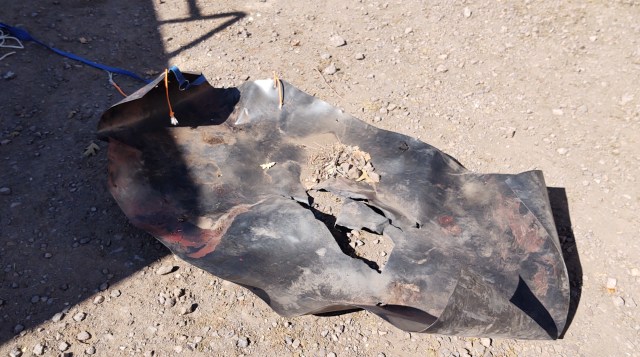
(And by he time we got down, it looked like this…totally trashed.) Remembering that we had flattened and packed out our emptied gallon water jugs, Paul cleaverly slid them between the deer’s torso and the holes/gashes of the sled in an effort to save the hide from being “sanded” off.  Eventually, we got to camp thanks to Brian, his brawn and is truck, and discovered that Paul’s ingenuity had worked.  The hide was intact.
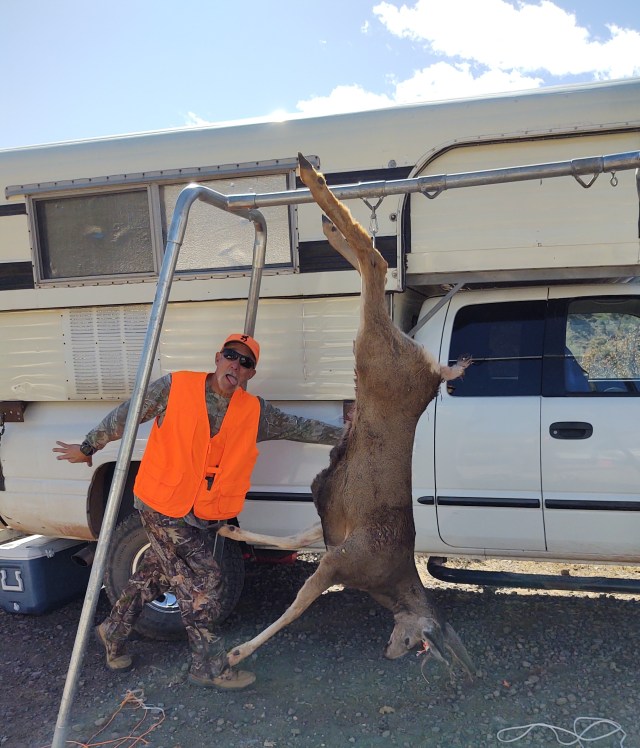
Brian, photo-bombing Paul’s deer

Back at camp, we hang our freezer buck to “season”, on the buck pole.

And as it was more than cold enough, we let him hang for a few days before I got to butchering him (the deer).

img_20191021_124804908_hdr


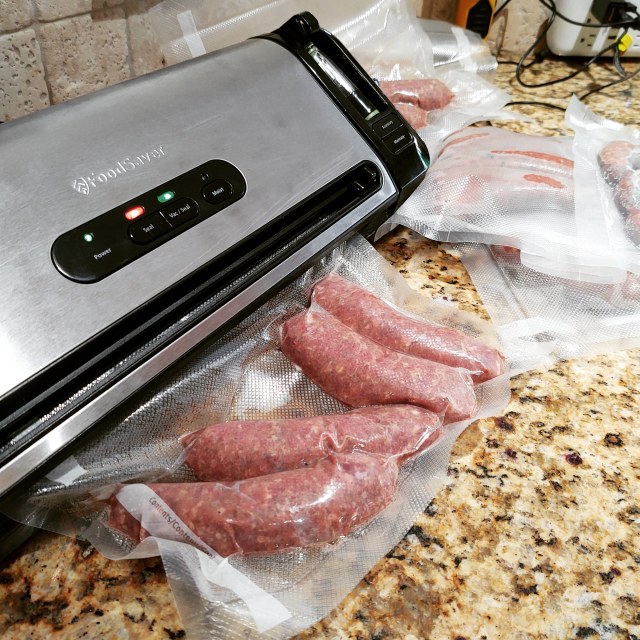
Once home, the final processing takes place, some of which, to include venison brats.
I continued to hunt in the lower areas for a few more days, with no success.  Finally, I convinced Brian to join me on an early morning (headlamp) trek to the upper meadow, for one last try.  As he had seen as much as I had, which was NOTHING, there was nothing to lose, except a few pounds or so, via the trek.  Morning came, and just about went.  Then, BLAM!…and BLAM again.  Sadly, neither shot was mine.  Brian, on the other hand was successful, and so began the long hard slog down the .001 grit trail, back to camp.  The haul was no less daunting than the three days before. And as with our sled, Brian’s was no match for the trail as well.  In many ways I was glad it was Brian who had been successful: (1) It wasn’t my deer that destroyed Brian’s sled; (2) I didn’t have to wrestle the deer down the trail (Actually, Brian being the consumate gentleman, and frankly stronger of the two of us, would have most likely done the lion’s share of dragging the deer, had I been the successful one); (3) We were out of cooler space to store another butchered deer…although I’m sure we would have come up with some way to solve that “problem”.

When we finally reached the reservoir, a young man who was fishing, offered the use of his ATV to haul Brian’s deer the rest of the way to truck where Paul was waiting, with cold beers, and a warm truck.  And with that, we were homeward bound.

img_20191023_164839834

Posted in Exploring Utah, fun with friends, Hunting Adventures, Mini Adventures, Mule Deer Hunting, Uncategorized | Tagged , , , , | Comments Off on Utah hunt

A little backlogged

So I’m a little back logged with the posting of some adventures this past year. I have two more to finish writing up, and had hoped to post them before the end of the year, but alas I have been sidetracked once again. Recently, I went to watch my brother race his car (1968 Chevelle) at the Irwindale Dragstrip.img_20191222_153911797 and decided that rather than write about it, I would video it, mainly because I am trying out a video editor app for my phone, (PowerDirector, by Cyberlink, for Android), and am considering interspersing our blog with a Vlog or two when we set out on the Continental Divide Trail (CDT) in April of 2020.
Shooting the video clips was fun, but the production end of it was a whole other learning curve that sucked me down rabbit hole of perfection. So far, the sweat equity is a little excessive, in that we thought it might be “easier” than thumb pecking at the end of each days hiking, or adventure. Thus far, I have found that uploading to YouTube from my phone takes a bit longer with our crappy WiFi, so here’s that also. But it’s worth a try, and it’s about time that I apply the degree that I earned in college. Luckily, we (meaning mostly me) have some time to practice before we commit to straight Vlogging or more likely a combination of VLog and Blog, or continue just blogging. In any event, we’ll be posting a video (training) or two as we go.

So without further rambling, here’s the video I made of my brother’s recent race day. Let me know what you think. (I didn’t mean to post the video with this thmbnail look by my brother, but then this pays him back for when we were kids and he emptied my piggy bank…AND raided my coin collection… to buy a hamster!)

…Paul is researching drones now. Argh!

Posted in 1968 Chevelle, Continental Divide Trail, Drag racing, Irwindale Dragstrip, Road Trips, Uncategorized | Tagged , , , , | 4 Comments

The History of the United States Capitol

In keeping with our DC Tourist adventures, I found this video of the United States Capitol (of which recent restoration has been completed) to be interesting and informative.


Posted in DC Adventures, Exploring Washington DC, Uncategorized | Tagged , , , | Leave a comment

DC Tourist – Day 7 (final day)

(October 8, 2019)

img_20191008_103921256_hdr

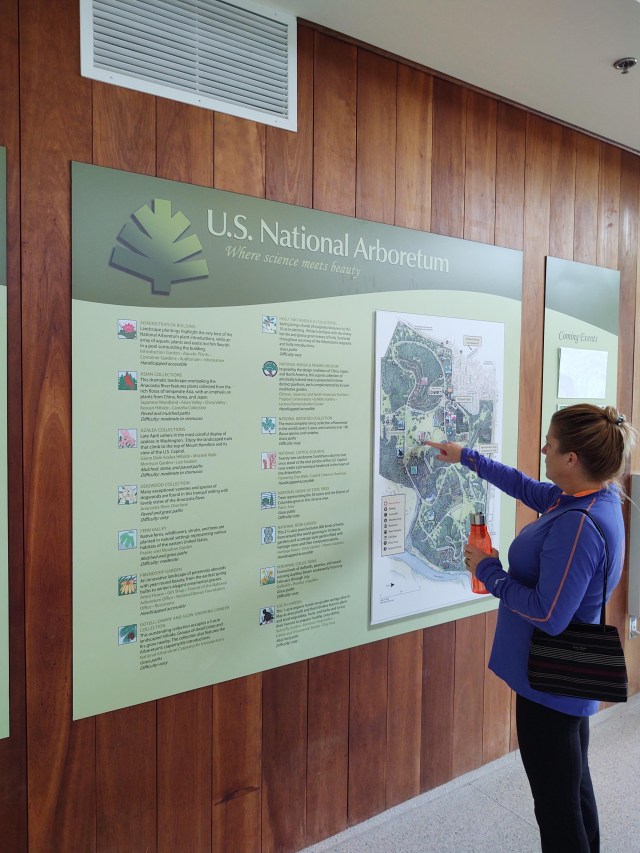
It being our last DC Tourist day, it was only fitting that we finish the “mystery” of the Capitol Stones.  Our day three DC excursion included hiking to the plain sight “storage” of the U.S. Capitol building’s original stones at Rock Creek National Park.  When we wandered over and through the discarded (I mean stored) 200 year old sandstone blocks (that were removed in 1958), the columns of the original East Façade of the Capitol building were demonstratively missing.  Never fear.  We found them, but it required a visit to the National Arboretum, dedicated in 1927 and maintained by the US Department of Agriculture’s,  Agricultural Research Service.  The National Arboretum is a 446 acre spread, with 9.5 miles of winding roadway, in the middle of what is now an industrial area. It is replete with a unique assortment of “green growey stuff”.  Here you will find a 30 acre Grove of State Trees, from each of the 50 states (a “treasure hunt” for another day), just about every conifer tree on the planet, the National Bonsai and Penjing Museum (with over 300 specimens, one of which from 1625), the largest herb garden in the United States, perennial gardens, and of course the National Capitol Columns.  The Arboretum is an oasis of greenery in a sea of small weathered homes, cement, iron and brick. In fact, an abandoned brick factory, The United Brick Corporation, flanks the Arboretum grounds, and also bears a visit for another time.  img_20191008_095930181As we were visiting in October, I imagine the spring time would be spectacular, and during the winter, with a bit of snow, one could enjoy an afternoon of snow shoeing or cross country skiing. Luckily, under grey skies, we were here to see the Capitol Columns.  After checking into the visitor center for a map, we were on our way.

img_20191008_100312290_hdr

We found the original sandstone columns set in 1828 at the East Portico of the Capitol Building, standing in all their splendor on a knoll in the 20 acre Ellipse Meadow.  We parked just off the road near a slowly eroding capital (the “crown” of the columns) on display.

The intricacies of the sandstone carver’s ornamental decoration of the capital is remarkable, and it creation obviously time consuming, as it took 6 months to complete each capital (there were at least 24).

img_20191008_100943721_hdr

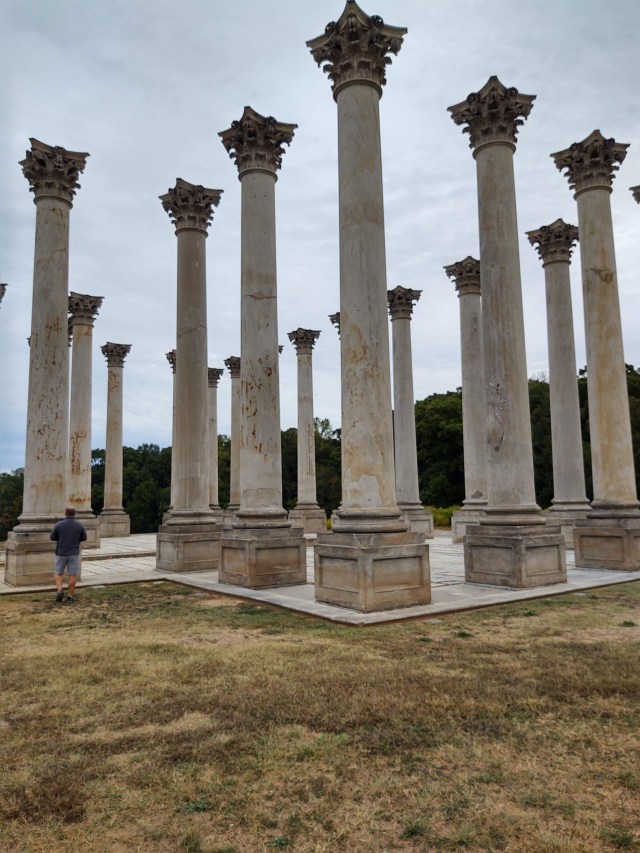
A slow and deliberate walk through the meadow leads you to the remaining 22 of 24 columns, whose originally situated place at the Capitol building provided the backdrop for the Presidential inaugurations from 1829 through 1957.

img_20191008_101611928_hdr

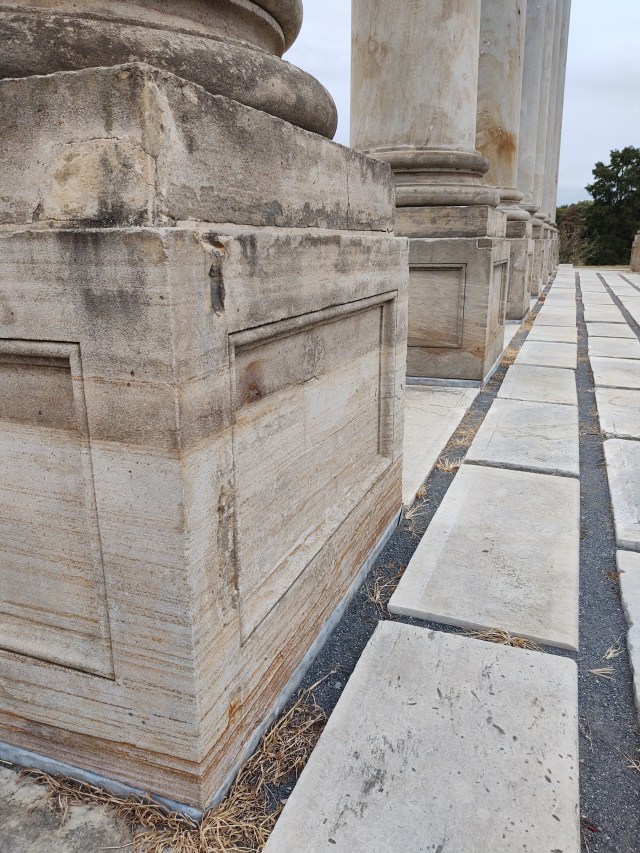
Set on a small hill, with a small reflecting pool below, these massive Corinthian columns rest on a foundation of steps from the same East Portico from whence came the columns.

img_20191008_101529890Imagine the history that passed through these columns, and tread upon these steps.  It is fitting that these columns found such a stately setting to “grow old”, and were rescued in 1990 from languishing in a government yard of obscurity.  We wandered through the columns, taking time to examine each one and the stone steps upon which they rest. It was peaceful and awe inspiring.  We had the place to ourselves!

img_20191008_102649094_hdr

When we were done, we drove through the rest of the Arboretum and explored on foot a bit.  As it was a bit chilly, and having an evening engagement, we had one more stop to round out our DC Tourist week.

img_20191008_120459046_hdr

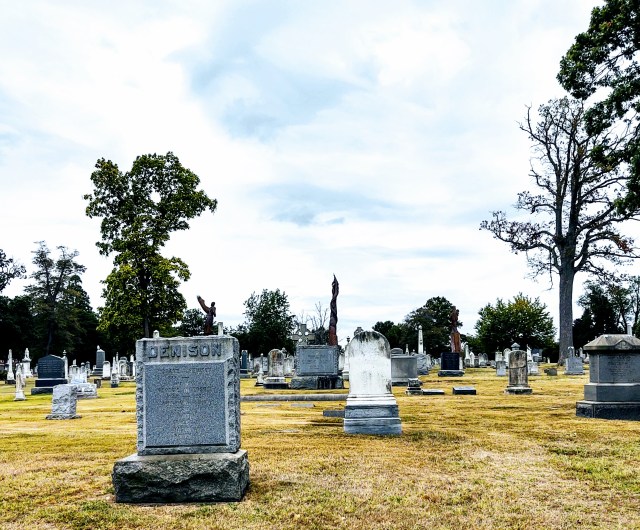
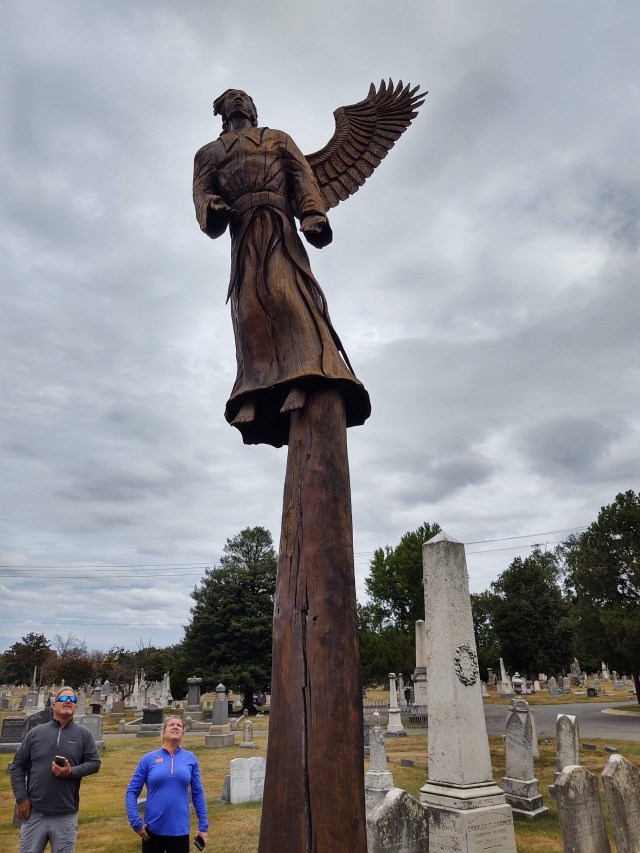
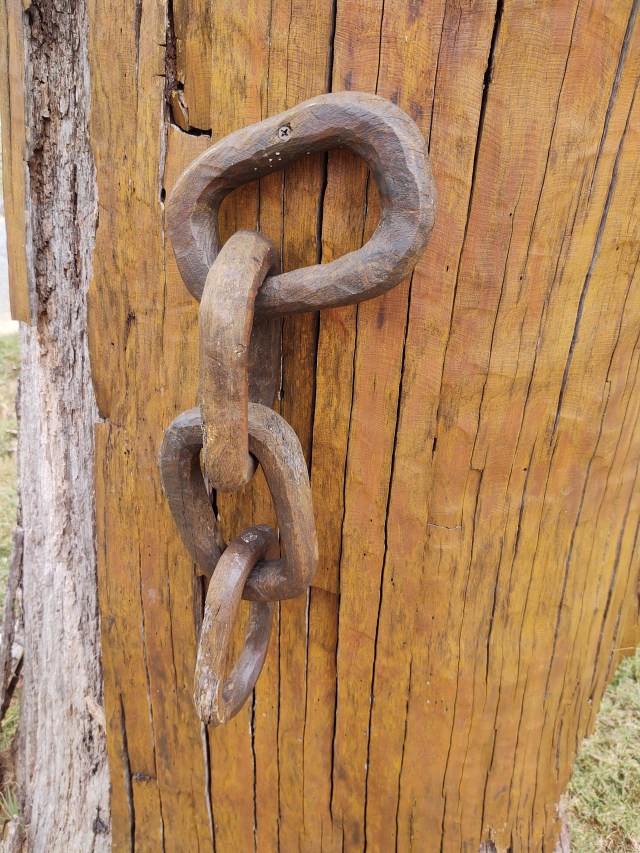
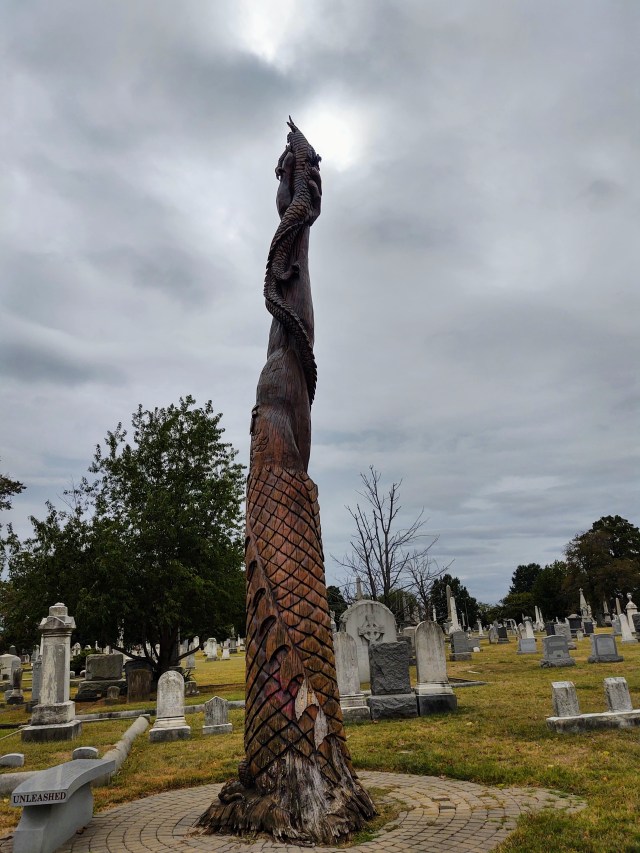
One can’t visit a historic city without hitting its oldest cemetery, and some iconic art within.  Off we headed to the Glenwood Cemetery, where it is rummored that one of John Wilkes Booth’s co-conspirators (George Atzerodt) is said to lie…in an unmarked grave. As of 2017, the cemetery became listed on the National Register of Historic Places.  An intersesting side note is that the ownership of this cemetery was contested during a bitter divorce dispute which actually went as far as the Supreme Court [Close v. Glenwood Cemetery 107 US.466 (1883)].  In short, the wife lost. We, however, were here to see four unique chainsaw sculptures made from 200 year old toppled oak trees, by chainsaw artist Dayton Scoggins.

img_20191008_115108562_hdr

The three of the four chainsaw sculptures Scoggins “carved” reside amoung Victorian and Art Nouveau style mausoleums, marble sculptures and stone obelisks, all placed in memory and in honor of loved ones passed.

img_20191008_112823872_hdrimg_20191008_112607250_hdrimg_20191008_112723560img_20191008_112508964_hdr

img_20191008_112436358-1 As we examined the detiorating sculptures, one of which (the sabertooth tiger) had toppled and been removed, we for some reason felt compelled to wander the cemetery grounds and examine the crypts and gravestones.

img_20191008_112847373_hdr

Some were marvelously extravagent, while others were simple, yet profound.  We noticed a trend in the ages and time periods of death.  img_20191008_114515998_hdrWe found a significant number of gravestones with similar ranges in years (1881-96) marking ones death, and significant number of children dying 1894-95. A bit of research revealed a number of pandemics that reached all socio-economic classes of the day.  The speed in which the U.S. population was growing resulted in increasing concentrations of people in its already overcrowded cities.  Close quarters (as we now know) are petri dishes and breading grounds for any number of communicable diseases. From 1881-1896, the U.S. lost over 50,000 people to the “5th cholera pandemic”.  Malaria became an issue for DC in 1895, and the disease of Consumption (Tuberculosis, or TB) that was originally thought to be transmitted hereditarily, mainly through the poor until the rich got sick as well, resulted in changes to society and daily health habits that we now take for granted. The ravages of TB (that we now have vaccinations and antibiotics for), created laws that prohibited spitting in public, in invention of reclining chairs, the habit of hand washing and brushing of ones teeth, open spaces, city parks, and the value of fresh air outdoor recreation.  Who’d a thunk it, that with this visit to an iconic cemetery to view some unique art, we learn a bit more about our history and its application to our current lives?

Our week spent in DC, exploring with family was time well spent, and only served to further wet our appetite for knowledge and adventure.  As such, there is no question that another visit (to DC) is required to further explore and delve into the more obscure aspects of our history.

With that, however, it is now time to head for home and prepartion for an annual outdoor adventure, to fill our freezer with venison.

Posted in DC Adventures, Exploring Washington DC, Mini Adventures, National Register of Historic Places, Uncategorized | Tagged , , , , , | Leave a comment

DC Tourist – Day 6 (part two)

(October 7, 2019)

img_20191007_150349063_hdr

So, after the National Law Enforcement Museum and Memorial, we headed further downtown, and happened upon Ford’s Theatre (a former First Baptist Church), where President Abraham Lincoln (our 16th president) was assassinated by John Wilkes Booth, on April 14, 1865, of which date also happened, in a twist of irony, to be Good Friday. Lincoln’s assassination was precipitated not only by the surrender of the Confederate General Robert E. Lee and his army to General Ulysses Grant on April 9, at Appomattox (essentially marking the end of the Civil War) six days prior, but also a speech Lincoln made two days after the surrender (April 11, 1865) of which Booth was present, wherein Lincoln promoted voting rights for blacks. This tipped the scale for Booth, from intent to kidnap Lincoln, to murder.

We arrived at an opportune time, in that there was no line to get in, as “normal” for this Historic Site.  Normally one has to have reserved tickets on-line ($3/person, for a specific time slot), or wait in line, to get even get into Ford’s Theatre, as they closely monitor the number of people allowed entrance into the theatre portion each half-hour.  Even so, we almost passed this opportunity by.

img_20191007_161428182_hdrBut, seeing as it was free, with no wait, and none of the rest of our family group had been to Ford’s Theatre, we ducked in.  I had been here years ago while “chaperoning” my daughter’s 8th grade DC trip, and was curious what improvements/updates, if any, had occured.  Since my last visit, tremendous renovations and improvements certainly had been made.  There are four distinct components to this Historical Site:

The Museum (all things having to do with Lincoln, his life, presidency and assassination); 

Being able to examine artifacts like the pistol (.44 cal Derringer), and a replica of the round that killed Pres. Lincoln, as well as clothing and personal belongings of Lincoln and those involved in the assassination was fascinating.

The Ranger Talk in the theatre;

I found the Ranger “talk” or rather splendid oratory and tidbital (a word have since made up) information as to the theatre’s and Booth’s history, and the events leading up to Lincoln’s assassination captivating.

The Aftermath Exhibits (the hunt for Booth and subsequent events and artifacts); and The Petersen House (across the street where Lincoln died) where even with a ticket there always seems to be a significant wait;  

img_20191007_161456760_hdr

Petersen House

Things I learned from this visit, included:

  • The theatre was originally the First Baptist Church, but shortly after John T. Ford  bought the building and turned it into a “dance hall”, it burned down (December 1862), and was later rebuilt.
  • Following the assassination of Lincoln, the theatre was closed, as attempts to reopen the theatre were met with threats to “burn it down”.  As a result, the War Department leased the building from Ford (who interestingly enough, at the time of Lincoln’s assassination, was a good friend of John Wilkes Booth) . In 1866, the Federal government bought the building and turned it into offices.
  • Death revisited the “theatre” (now owned by the government) once more when three interior floors collapsed, killing 22 clerks.  Even before this happened, rumors had circulated that the building was “cursed”.
  •  In 1932 a museum to Lincoln was opened in “Ford’s Theatre”, and the year following, the museum and building became a unit of the National Parks.
  •  The evening of Lincoln’s assassination, Lincoln bid his driver “good bye” as opposed to his usual “good night”, which struck him as odd.  It was if Lincoln knew he was going to his death.
  • Live theatre has been reintroduced to Ford’s Theatre, by the Ford’s Theatre Society, as a tribute to Lincoln’s love of the theatre.
  • This National Historic Site is open everyday 9am-5pm, with the exception of Thanksgiving and Christmas day.

Following this visit, we couldn’t help but muse as to what our country would be like today, had Lincoln NOT been assassinated.

Posted in Civil War, DC Adventures, Exploring Washington DC, National Parks, National Register of Historic Places, Uncategorized | Tagged , , | Leave a comment

DC Tourist – Day 6 (part One)

National Law Enforcement Museum and Memorial:

(October 7, 2019)

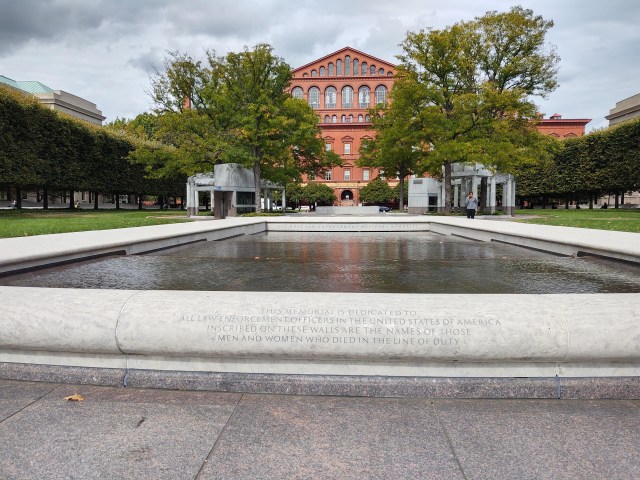
This day was spent in downtown DC. Our first stop was the National Law Enforcement Museum on 444 E Street NW, directly across from the National Law Enforcement Officer Memorial (dedicated October 15, 1991).  This 55,000 sq/ft museum, which is 60ft below ground, is chock full of interactive exhibits and some amazing historical and contemporary law enforcement artifacts.  In this museum, you can try your hand at forensics, undercover operations, or even test your “judgement” in the Decision Making Training Simulator that includes “shoot-don’t-shoot” scenarios in a virtual reality setting. I considered “dusting” off my skill set and trying out the simulator, but then thought better of it, as there is no use in “awakening” what I would call “safely stored” memories, as PTSD is a royal bitch.  In this museum, they have the ACTUAL U.S. National Park Police helicopter (and media footage of the rescue) used to rescue survivors from the 1982 Air Florida flight 90 plane crash into the Potomac River.  In additon to that display, there are plenty of immersive, experiential and interactive, as well as visual, audio and tactile exhibits to puruse and immerse yourself in the “day in the life” of a law enforcement officer.

img_20191007_112409444

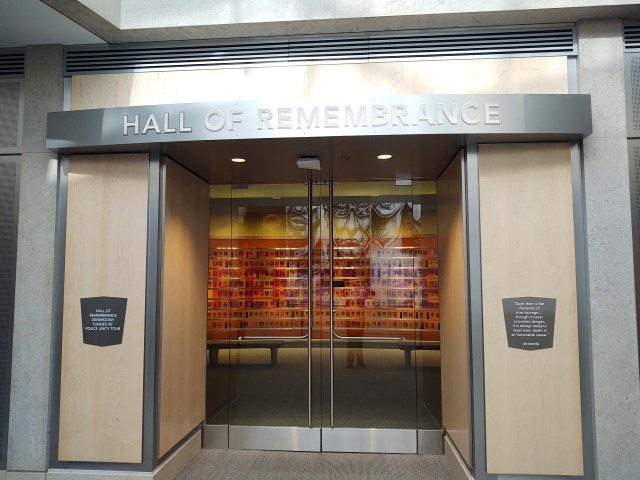
As the “day-in-the-life” of a law enforcement officer is not without peril, or ultimate sacrifice, you will find the sobering Hall of Rememberance, wherein officer’s portraits arranged by state, with their name/agency and their End of Watch date are displayed, that  were recently added in the spring of that year to the walls of the memorial, across the street.  Sadly, NYPD, as of late, has the most officers added annually as a result of illness(es) sustained during 9/11. Artifacts and personal mementos left at the National Memorial can also be found on display, that will make your heart ache and your eyes tear.

And with all museums, there is a gift shop wherein you can purchase Memorial Fund gifts and/or additional souviners.  I picked up a memorial coin that I now use for coin tosses, in water polo games I officiate. (one side = heads, the other = tails, or visa versa)

The National Law Enforcement Museum is open daily (except on Tuesdays, Thanksgiving and Christmas) from 10 am to 6 pm.  Children under 12 are free, however there is an entrance fee anywhere from $17 – $22 depending  on your  age and whether you are active duty (LE) or military.  If you purchase tickets online, you can save $2/ticket.  The fee is worth the price of admittance and helps to maintain and create new exhibits. While this October day saw  pretty sparse visitation to this relatively new museum (opened October 13, 2018), every May, in the week that contains May 15th this place (according to the retired LE docent) and more specifically, the National Law Enforement Officer Memorial, across the street from the museum, is crawling with law enforcement officers and “Survivor” families from across the country.

img_20191007_133248564_hdr

While most everyone is aware of and/or familar with Memorial Day for our military, most people have no clue that May 15th marks National Police Officer Memorial Day, and has since 1962.  Following a joint resolution from the 87th Congress, President John F. Kennedy signed into law (October 1, 1962) the designation of May 15th as National Police Officer Memorial Day, and the week that contains the 15th, designated as, National Police Week. Every year in May, families of the past year(s) fallen peace officers, and tens of thousands of uniformed active duty and retired peace officers from around the country make a pilgrimage of sorts to DC, to honor those who’s lives were cut short in the service of their community, and frankly our nation.  While I have been to more than my fair share of Law Enforcement Officer funerals and memorials, I have not been to DC during Police Week. Frankly, it is on my “bucket list”, if only to pay homage and honor those officers (and their families) who were not as lucky as Paul and I, and make it to retirement, alive and fairly healthy.

img_20191007_133231499_hdr

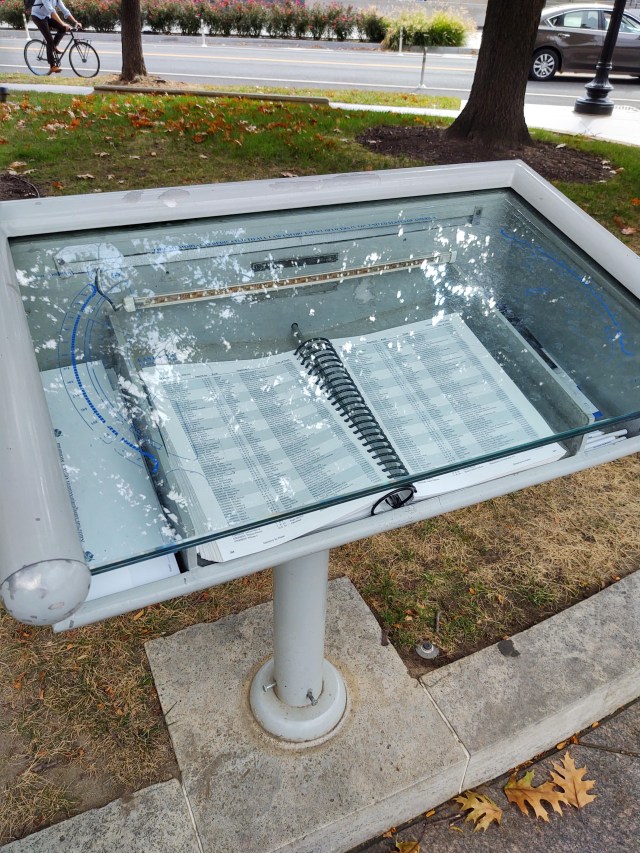
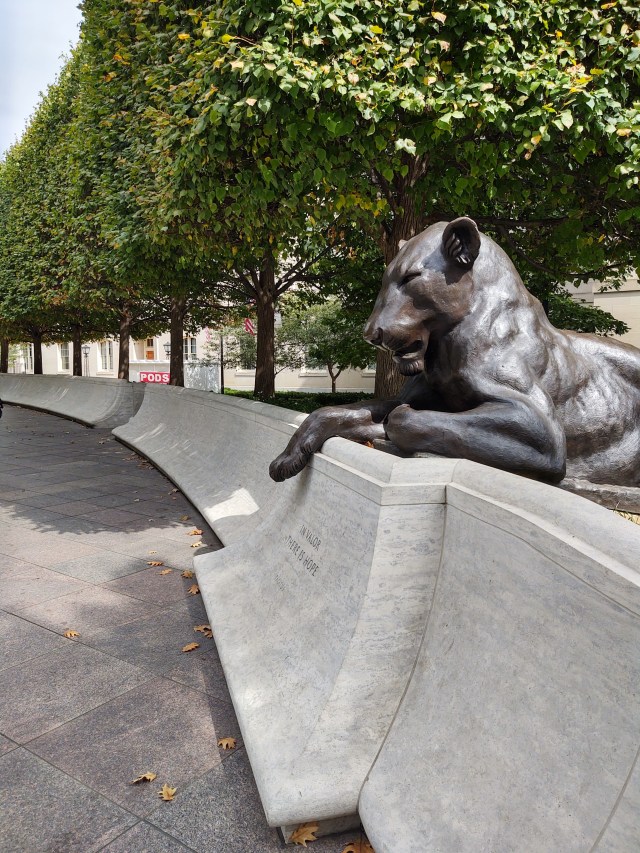
We did however look up names (and their location of the walls) of officers who we knew that have their names permanently engraved into one of the two 304 foot long, curving blue-gray marble walls that bracket the “Pathways of Rememberance”.

img_20191007_133150150_hdr

To date, there are 21,910 Federal, State and Local Law Enforement Officer names etched in stone, and at the close of 2019 over 22,000 officers dating as far back as 1786, will have given the ultimate sacrifice and died in the Line of Duty.

“You see the good don’t die young, but instead they live on,
              In memories, and many a heart.
             The good that you do does not die when you do.
             For the good, death’s not an end, but a start.”

– Lt. Dan Marcou

*(Last stanza of a 7 part poem – “Messages from a Fallen Officer”)

Posted in DC Adventures, Exploring Washington DC, National Law Enforcement Museum, National Law Enforcement Officers Memorial, Uncategorized | Tagged , , , , | Leave a comment

DC Tourist – Day 5 (part Two)

(October 6, 2019)

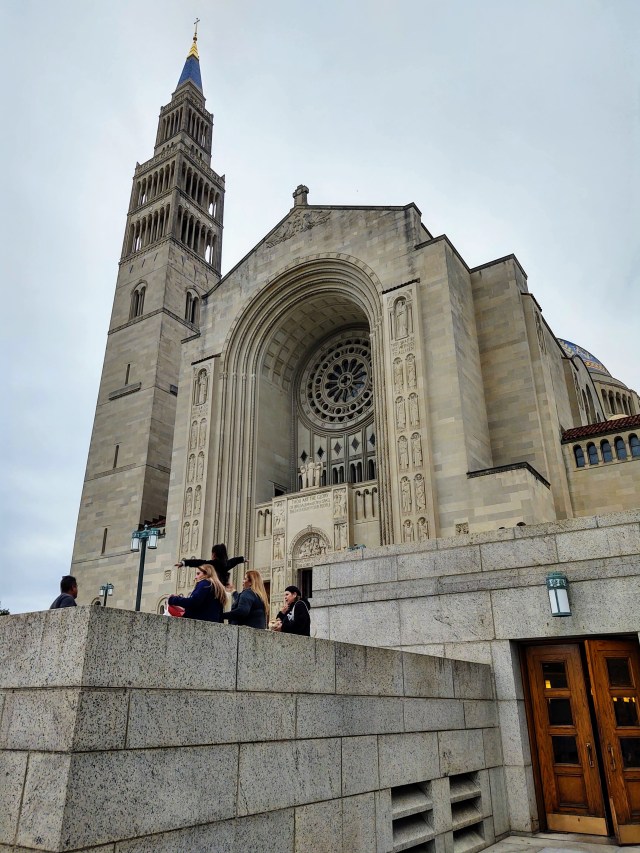
After a rousing game of golf (mini that is) we headed over to the Basilica of the National Shrine of the Immaculate Conception, located next door to The Catholic University of America. It is the largest Roman Catholic Church in North America, and one of the 10 largest churches in the world. To get a sense of its size, it is over 1-1/2 football fields in length and nearly a football field wide.

img_20191008_121445794_hdr

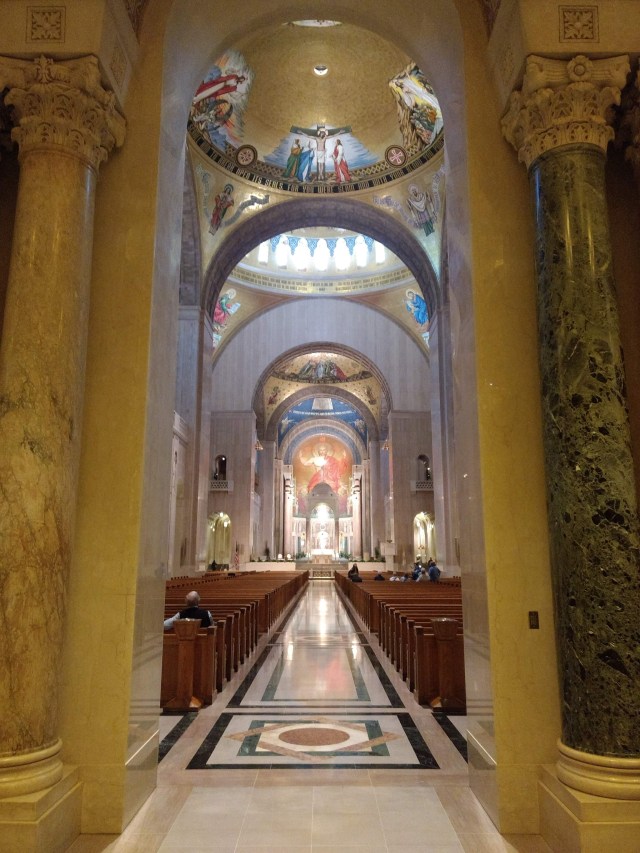
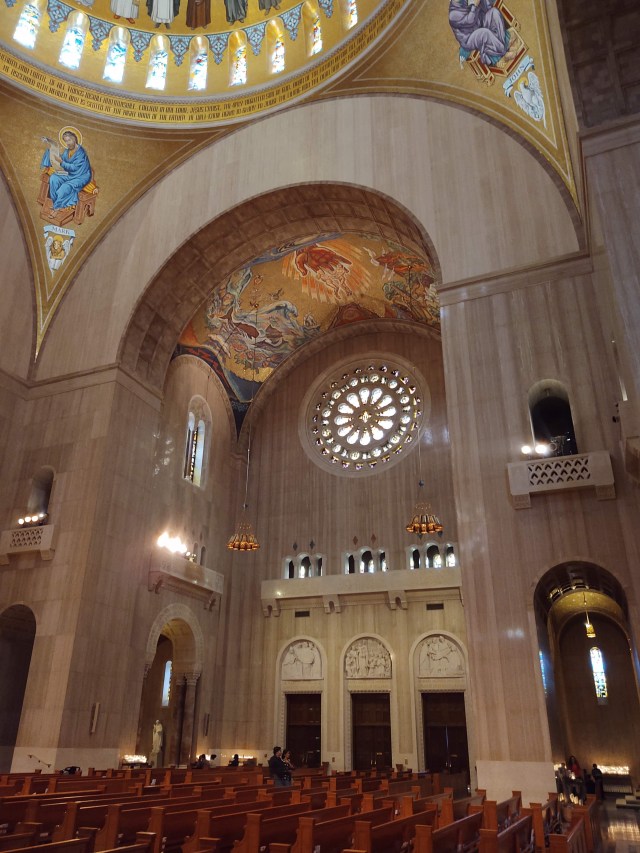
It’s “blend” of Romanesque and Byzantine style architecture, and contempary collection of Byzantine mosaics and marble ecclesiastical art contained within two floors, seven domes and over 80 chapels and oratories is breathtaking. The fact that there are NO structural beams, columns or framework that hold this massive structure up (and together), is a marvel of engineering and craftsmanship.  img_20191006_142237220_hdr-1

img_20191006_125951641_hdr

The limestone and granite used in its construction all hale from the good old U.S. of A.  The Basilica’s Bell Tower (or Knights Tower), makes the Basilica the 2nd tallest building in DC, after the U.S. Monument (555 Ft.),  standing at 529 ft above sea level (the tower is 329′, but the “hill” upon which the Basilica is built is at 200′ above sea level).

img_20191008_121635007_hdr

In 1847, in answer to the 1846 petition from the American (Catholic) Bishops at the Sixth Council of Baltimore, Pope Pius IX officially named the Blessed Virgin Mary (also referred to as the Immaculate Conception) the offical Patroness of the United States.

The designation would lay a foundation for the building of a great shrine that includes many a Marian Chapel from all ethnicities and cultures that make up the United States, to honor Mary.  In 1910, the rector of The Catholic Univestity of America, Monsignor Thomas J Shahan (later made Bishop, and the only priest laid to rest in the Cathedral) requested of Pope Pius X, permission to build a great cathedral (this Cathedral), to honor Mary, the United State’s Patroness.

img_20191006_142108885

A peak into the Upper Chapel that holds 6,000 people

Shahan envisioned the Cathedral to be on par with the great cathedrals of Europe.  He was granted permission in 1913 to build such a Cathedral.  And thus began the nationwide fundraising for its construction. Seven years later, on May 16, 1920 the land upon which this amazing Cathedral is built, was blessed, and September 23, the cornerstone laid.  It was to have two levels. First to be built was the Crypt level (lower level). At the Crypt level is: the Crypt Church (that seats 4,000); the Hall of American Saints; a Papal exhibit; Memorial Hall (here the names of donors, are etched into 14,400 marble and granite tablets);

img_20191008_133418345

One of the more “famous” benefactors

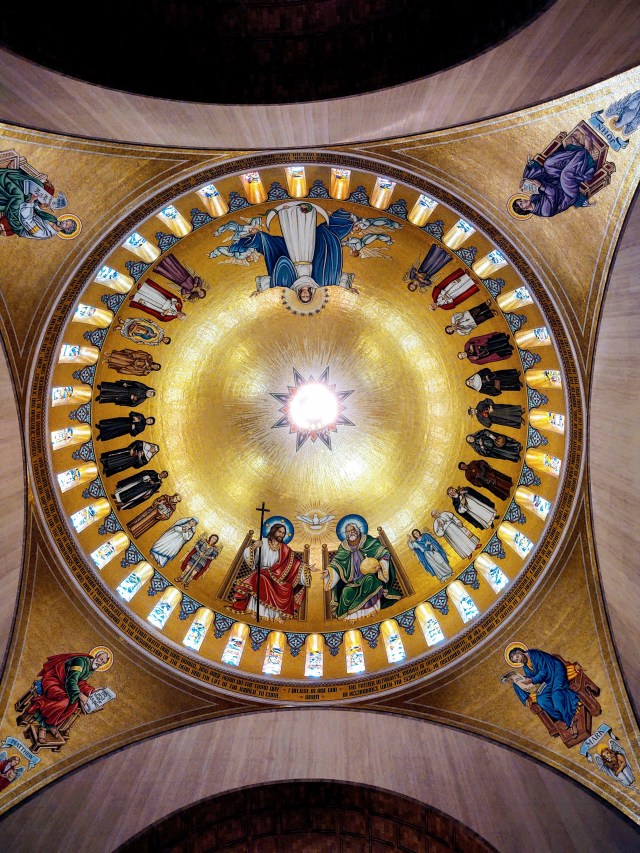
33 Chapels (Interesting note is that within the Our Lady of Lourdes Chapel is a replica of the grotto of Lourdes, (where Mary appeared to Bernadette Subirous, a peasant girl, in 1858) a stone, from the prison that held Joan of Arc, was used to build this chapel; 7 oratories.  The first public Mass was held on Easter Sunday April 20, 1924 in the Crypt Chapel (of which I have no pictures as daily Mass was in progress).  By 1931, the Crypt level was completed, but it wasn’t till November 20, 1959 with the second level having been built, that it was dedicated as a National Shrine.  Interuptions due to the Great Depression and WWII were significant factors in its lengthy build progress.  Interestingly enough, the entirety of project would still not be fully complete until Nov 20, 2017, whereupon the largest of the Basilica’s five domes, the Great Dome, or rather, the magnificant Trinity Dome mosaic was finished.

img_20191008_135634871

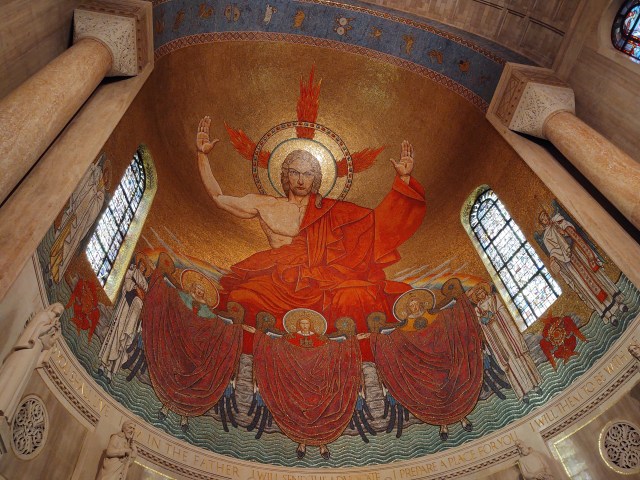
Trinity Dome

24 tons of Venitian glass brilliantly conveys the great Mystery of the Catholic faith, with the Holy Trinity, the Blessed Virgin Mary, angels and mainly U.S. saints, (or saints significantly associated with the National Shrine…ie Mother Teresa, as an example) are encircled by the text of the Nicene Creed in an 89 ft diameter 159 ft tall dome.  The largest mosaic of its kind, in the world.  It was everything I could do to not lay upon the marble floor and marvel at its enormity, craftsmanship, pure beauty and bask in its resounding message.  The Upper Level, along with the Church (that seats 6,000) are 30 additonal chapels.

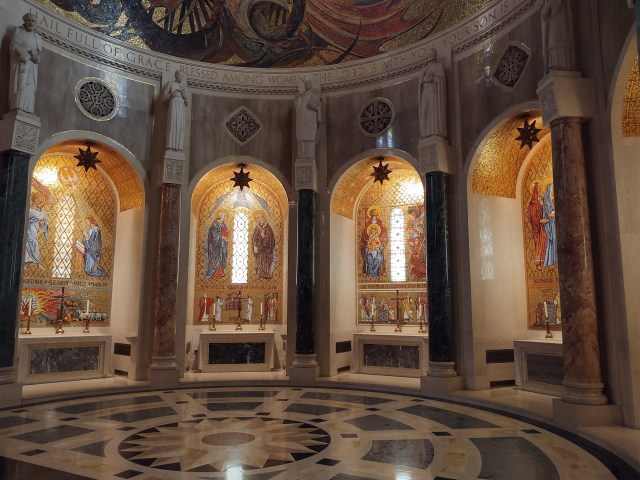
Fun Fact: Within this Chapel of Our Lady of Guadalupe not only will you find a stunning mosaic, but also the Basilica’s first altar that was used during the first Mass conducted in the Crypt Church on April 20, 1924.

img_20191008_140257840-1img_20191008_140337904-1img_20191008_135923379

The Byzantine style art, intricate mosaics and stained-glass windows, polished stone carvings, and marble veining throughout its interior that form symetrical patterns is truly captivating.

img_20191006_141609581img_20191006_131117844img_20191006_141256634

Having been to Lourdes (France), Portugal (Our Lady of Fatima), and having walked the entire Camino de Santiago (Frances route), Bishop Shahan’s dream, as he stated in his fundraising newsletters, the Shrine would be a

 “monument of love and gratitude, a great hymn in stone as perfect as the art of man can make it and as holy as the intentions of its builders could wish it to be.”

has been fullfilled, as this Cathedral truly is magnificent and certainly ranks with the great cathedrals of europe.

*As side note, there was so much to take in, we found that a one hour tour is not merely enough (whether you are Catholic or not).  Having gone back for a second “quick” tour, we found that each docent has different knowledge, or particular interests with regard to the history, significance and reason (and story behind) the art and chapels that grace this Cathedral. Still, two tours (hours) was NOT enough…for us (even Paul wanted to stay longer to take it all in). I think ideally, if one made a 1/2 day of it, you would also be able to tour the exterior as well, to include the garden. And besides, you never know, you just might get a photo op with the Pope.

img_20191006_140246531


Posted in Basilica of the National Shrine of the Immaculate Conception, DC Adventures, Exploring Washington DC, Uncategorized | Tagged , , , , , | 3 Comments

DC Tourist – Day Five (part One)

(October 6, 2019)

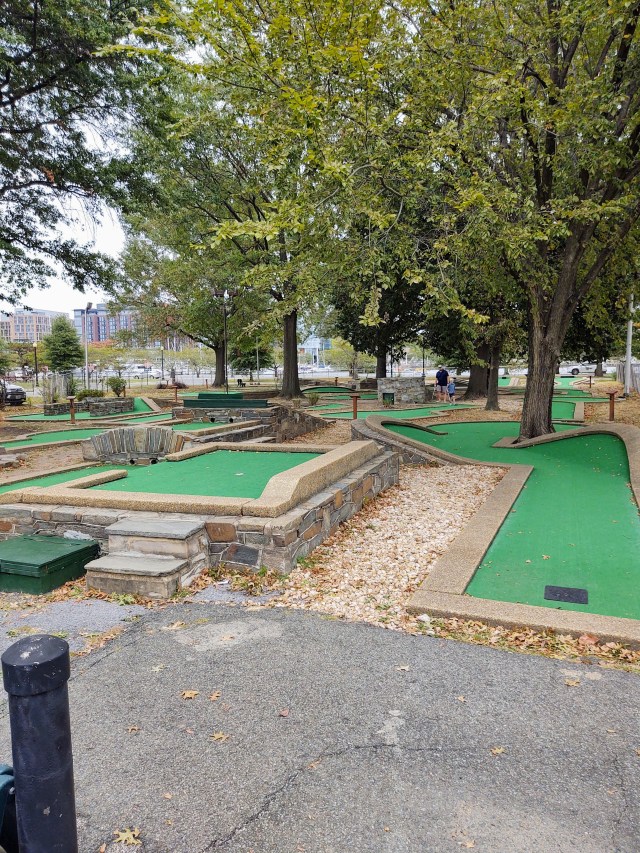
What says more about DC and politics, than golf. Often deals and meetings are conducted on the gold course away from the confines of starched shirts and indoor lighting. This day’s morning outing would include heading out to the East Potomac golf course, and playing one of this country’s oldest and longest running mini-golf courses. Yes. Miniuarature golf. Under overcast skies, we would play a rousing and often frustrating “Happy Gilmore” game of fast putt, many obstacled, minuature golf. This day of working on our “short game”, was historic. Not that we played the games of our lives…well maybe, but historic in the sense that the course we played upon is the OLDEST continuously operated minuature golf course in the country.

img_20191006_114159793

It opened in 1931, and one can only imagine the multitudes of people that have “puttered” around this course. At $6/child and $7/adult it was a “steal”.

img_20191006_120316048_hdr

As it was “off-season”, the caddy shack (pictured above) was closed so we had to go into pro shop to pay our “greens” fee and pick up one of many multi-colored ball options. Once that was done, we picked out our putters from a barrel outside the caddy shack, and it was game-on!

img_20191006_110244031

While its current state is a bit “tired”, it was nun the less, both fun and challenging, and was not without many a belly laugh.

If one is looking for something historic, unique and off the beaten path to do while in DC, this is worth the outing.  April – October you will find it open daily 10am till dark (whatever “dark” means).  November – March, however, it is only open Saturday/Sunday, 10am – dark…weather dependent of course.

img_20191006_110828840_hdr

Posted in DC Adventures, Exploring Washington DC, National Register of Historic Places, Uncategorized | Tagged , , | Leave a comment

DC Tourist – Day four

(October 5, 2019)

One of our favorite television “history” shows is Comedy Central’s, Drunk History. In this show, learned scholars with expertise in a specific area, historical event and/or person of historical significance, tells a story of said historical event/person peppered with additional insight/information based upon their studies/knowledge, whilst significantly inebriated. Comedy Central actors act out the scenes (and dialogue) as told by said learned expert.

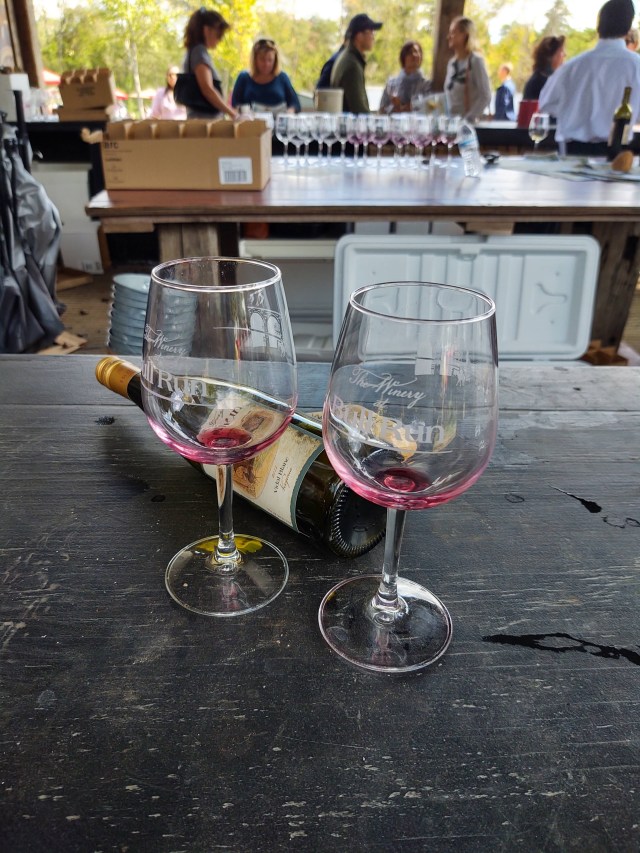
With that in mind, this day’s excursion was fraught with history. Our destination, via General Lee Highway, Bull Run. The Winery at Bull Run to be specific (as there are around 250 wineries in Virginia)

What a better way to examine the completely disastrous (for Union forces) Civil War’s First Battle of Bull Run (yes there were two), then from where the first shot was fired.

Here with our niece and nephew (who are “club members”…with benefits), we would taste two flights of tastey Virginia wine, which by the way, in order to qualify as “Virginia” wine has to have the grapes, from which the wine is made of, predominately grown in Virginia.  This particular winery boasts of a wine made from Virginia’s own “native” grape, the Norton.

img_20191005_140603445_hdr

Following the generous tasting pours, we enjoyed another bottle (or two…can’t remember) with an elevated view of the beautiful landscape that “hosted”, the Battle of Bull Run.  Here, I would learn that this particular battle (of Bull Run) apparently had a “cheering” section, ie Spectators. Spectators you ask, well have I got a story for you…via “drunk history”.

History and libations!  What could go wrong?

(This next entire piece is more fun, if read with a slur…real, or imagined.)

So this particular First Battle of Bull Run, also known as the “First Battle of Manassas” (so much easier to say after a few drinks), took place approximately 25 miles from Washington DC, on July 21, 1861. (By the way, and fun fact. The Confederate forces liked to name battles after nearby towns, while Union forces named them after natural features like rivers/creeks/hills.) So anyways, up to this point, the “Union” and the “Northerners” didn’t really take this Civil War thing seriously.

[Insert scene with period attire “Northerners” at afternoon tea…

This war thing is so preposterous.

I mean really.  Slavery is so 1600’s.  

Geez, get with the times!  

I freed my slaves years ago. Now I pay them wages and they don’t live in my house.

If you ask me, those Southern folk are all just a bunch of country bumpkins, who we should give a good thrashing”.

…scene]

But the fact that the Confederate forces were camped some 25 miles away along the Bull Run creek, near the town of Manassas , put them just “too close for comfort”.  The political big wigs wanted the Confederate “menace” removed, and this “rebellion” quashed…immediately!

[Insert scene with President Lincoln, influential Congressmen, Senators and Lincoln’s cabinet...

“We don’t have the time or the money for a lengthy war! 

Hell, we don’t have enough soldiers as it is. 

Not to mention the 90 day enlistements, that genius came up with over here, expire near the end of July.

Isn’t that a good bulk of our Union forces?  

We need to get this “rebellion” over pronto!  

Our 35,000 soldiers vs their 20,000 is a no-brainer.

It’s a simple numbers game, and it’s a days walk to Bull Run where those hillbillies are camped.  

I say we end this NOW!

Get McDowell in here!”

…scene]

Nevermind that the Union Army’s Brig. General, Irwin McDowell (newly promoted 3 ranks from “desk duties”, thanks to the influence of his buddy, and Secretary of the Treasury – Salmon P. Chase) didn’t think his troops were adequately trained or disciplined. ‘Sorry ass bunch of greenhorns’…or something to that affect is how he described his troops. But the politicians (who obviously knew better) thought if they attacked right away, the war would probably be over in a couple hours, or so.  Besides, they told McDowell, if you won’t do it, we’ll promote a General that will. So on July 16th, 1861, McDowell not wanting to lose his job title rallied his troops and marched them in ridiculously hot and muggy weather…to battle…and for the most part, this very place upon which we are imbibing. Did I mention that it took twice as long as they had planned? Some dumbass forgot to pack enough field rations for the troops, so they had to wait for the wagon(s) to arrive.  And, as it was so frick’n miserable of a walk, the troops, regardless of orders, would stop to rest and/or wander off to get a drink and/or pick apples, blackberries, whatever they could find, before continuing on…reluctantly.  Meanwhile, the Confederates, led by West Point graduate and former US Military officer, Pierre Gustave Toutant-Beauregard (the “Little Frenchman”), was camped by the town of Manassas, fully fed, rested and aware that McDowell and his exhausted men were coming (thanks to a spy in the Union Army…or would you call him a traitor?).  Just for good measure, the “Little Frenchman” called for reinforcements (8,900), that were delivered by train, and just in time!  These reinforcements just happened to include, of notable report, a Thomas J. Jackson, aka. “Stonewall Jackson”.  It is here that the legend of “Stonewall Jackson” would begin, with having stood his ground (on Henry House Hill with his artillery)…like a Stonewall, whilst Confederate General Elliott Bee Jr. and his troops retreated…because they were tired.

Anyhoo.  The Union troops arrive around the 18th, and get a day or so of rest.  The morning of the 21st, and in the dark (say 2am-ish), 12,000 troops moved into their positions for a morning attack, having spent most of the time stumbling in the dark and getting lost. ( So they had that going for them as well.)  As daybreak comes, reporters, government officials and average citizens are picnicking not far from this winery (actually nearby as there wasn’t a winery here then) with lunches and libations to watch the “festivities”.  Many of them, I’m sure drinking wine made from Virginia’s own “native” grape, the Norton. I am told also, that German monks (brown robe guys), seeing that war was coming, and to be sure that the orginal Virginia grapes weren’t ALL lost in upcoming battle(s) dug up some plants and high tailed it to Missouri or someplace like that to preserve the “native” Norton grape…or maybe that was during prohibition…Either way, it was a good idea, as I found the Norton wine to be quite good.

img_20191005_133647908_hdr

If you think about it, who doesnt’ want to watch a good battle, in your Sunday best, over snacks and a bottle of wine? The battle begins, and things seem to be going okay for the Union forces, to which I’m sure the admiring spectators were clinking their glasses of wine, peering through opera glasses, commenting on the soldiers attire and tactics, and fist-bumping with each successful surge and kill by the Union Army…until it droned on to late in the afternoon.  It appears that being hot, sweaty, a little chaffed and poorly rested and fed, take a lot out a person, particularly a volunteer soldier with a week left in their enlistment.  In fact, some (two full units – 300ish) whose enlistment ended on the 21st, just said ‘fuck it’ and left.  McDowell tried to get them to stay, but seeing as he wasn’t the “boss” of them anymore, they told him ‘it’s been nice knowing ya’, and walked back to DC to turn in their stuff, and get their check.  So, by 4pm the battle was about even, and snacks were in short supply. The fans were a little dismayed.  General Beauregard (the Little Frenchman) had also had enough of the stalemate, and not wanting to be late for dinner (I added that part), ordered his confederate troops to “Charge”. Stonewall Jackson, additionally told his troops, “And when you charge, yell like furies!”…’that should make them shit their pants!’  And with that, the “Rebel yell”, was born.  David Bowie had nothing to do with it.  So, this apparently scared the shit out of the Union forces, so much so that they hastily advanced to the rear…also known as running away.  They fled in a very disorganized retreat.(I imagine a Three-Stooges style retreat here)  This of course was quite upsetting to the spectators, who having become a little bored with the lack of action, weren’t really paying attention, or were in the process of high-fiving over what they thought was going to be a big “W”.  NOT!  “WTF!” I’m sure they said, as the soldiers trampled over their neatly laid out picnic blankets near Centerville Virginia (a few miles from the actual battle). Being good citizens, some offered refreshments to the fleeing soldiers, while others threaten to shoot the same soldiers if they didn’t go back and fight. But like all superficial sports fans, who leave a perfectly good game early, believing they know the outcome, the spectators similarly packed their shit and left before the battle was fully over.  Actually it was a good thing, cause Union Army lost, BIG TIME!  That put two big battles in the WIN column for the Confederates and especially the Little Frenchman , who started this whole Civil War fighting thing when he successfully attacked Fort Sumter in Charleston South Carolina (April 12-13, 1861).

Following the successful “Charge” and dispersal of Union troops back to DC, Stonewall Jackson returned from battle to where Beauregard had withdrawn his troops.  Because both the Union and Confederate flags looked so similar (from a distance and when really tired), Beauregard got a little worried that he was about to get overrun, as he was not sure who was advancing on his position.

See the source image

[Insert counrty scene with Beauregard and Stonewall in conversation…Stonewall clasping Beauregard’s shoulder,

Stonewall: “Dude, it’s just me and the guys.  We won!”

Beauregard: “Ya scared me there for a moment. I thought I was gonna get my ass kicked.  We gotta do something about this flag.”

Stonewall:  “Ya, I was wanting to talk to you about that. General Lee has an awesome battle flag. A fully red flag with a big blue X with stars on it.  Dude, it’s really distinctive. We might think about getting a few from him”. 

See the source image

Beauregard: “Ya, that would be a little less confusing, and I wouldn’t have to change my shorts so often…if ya know what I mean.  Let’s celebrate with a drink!” 

Stonewall: “No thanks. I like liquor, its tastes and its effects, and that’s why I never drink it”. (true quote)

And with that, the Little Frenchman pops open a bottle of “local” wine and finishes it off himself]

…just like this nice bottle here.

img_20191005_133037108_hdr

So when everyone got back to DC, which miraculously only took a day for what remained of the army, and the smoke cleared, 2700 Union Troops had been either killed (460), wounded (1124) or missing (1312).  2000 Confederate troops had also been either killed (387), wounded (1582) or missing (13). This defeat woke up the North, and President Lincoln for that matter, to the fact that the South was serious about the economics of maintaining slavery and which powers (State vs Federal) rightly belonged to whom. In fact, so shocked by the loss, the next day, Lincoln signed a bill authorizing 500,000 more troops and 3 year enlistments. No more of this skipping off from a perfectly good battle, because your contract ran out.  Sadly, the 2nd Battle of Bull Run (or Manassas – if you’re a Confederate) would be won by the Confederates…again. Yet the Union would prevail, nearly 4 years later (April 9, 1965), but not without over 620,000 (some put it as high as 850,000) American soldiers (combined, both “sides) having lost their lives.

All joking and libations aside, the breadth of history (good and bad) that can be found within the DC area is mind boggling…or in this case, mind bottling.

…hic, hiccup.


Posted in Civil War, DC Adventures, Drunk History, Exploring Washington DC, First Battle of Bull Run, First Battle of Manassas, Uncategorized, Virgina wineries | Tagged , , , , , , , | Leave a comment

DC Tourist – Day Three

(October 4, 2019)

Unbelievably, there is more to do in DC than visit museums and wander downtown. As we are often drawn to adventures off the beaten path, today would be spent outdoors, and on a quest…of sorts. Having been fully enthralled with the International Spy Museum, and in particular the notorious US spy and FBI agent, Robert Hanssen, we discovered that Hanssen’s last “dead drop”, in Foxstone Park, was not far from our niece’s home, and on the way to the day’s planned adventure at Rock Creek National Park.Foxstone Park: Because the FBI’s recorded video of their takedown of Hanssen stated that he was arrested in a residential area near Foxstone Park, we plugged the park into our GPS. We knew that his last drop (USB Thumb drives) was placed under red footbridge in Foxstone park, in Vienna Virginia. Our mission, was to find that bridge and “re-inact” the drop. There are several paved paths within the neighborhood that weave through the park. We chose Foxstone Ave and parked in front of a house that looked like the one he had been arrested in front of. While it’s been nearly two decades since Hanssen’s arrest, I’m sure the neighborhood rolls their eyes (and curses the Spy Museum) when “tourists” pile out of their cars in search of Hanssen’s last drop. We brought our niece’s family dog with us as “cover”…and because he LOVES car rides, and walks.

We found a foot path in-between two homes. We couldn’t help but notice that it smelled like something had died nearby. Hmm, maybe we were on the right path, and this stench was supposed to be a permanent deterrent. The path led slightly downhill and into a wooded area. The path branched off immediately, in three directions with a low (grey) footbridge to our right.

This bridge was obviously too low, and not the right color. Straight or “uphill”? We headed straight for a bit into a green “tunnel” of healthy trees and low vines intertangled with poison ivy. Somehow, this direction did not feel right, so we headed back toward the “fork” in the road, to take the final path option. Turns out, that this one was the correct path. This reminded us that we should have employed our tried and truth method of route choosing, “when in doubt, Go Uphill”.

Soon we were at the Foxstone park sign.

Across a busy street from the sign was a closed off driveway to a parking area, and in the near distance, what appeared to be the infamous red bridge!

A QR sticker on the bridge confirmed we had successfully located the bridge.

As we looked under the bridge and “re-created” the drop, we couldn’t help but laugh at how ridiculous we looked and what a horrible place this was to have a dead drop so close to homes (that could see you) and a busy roadway (well, maybe not so busy then). There were so many areas along the way, that could have been used for dead drops than squatting under a foot bridge to drop a small package with thumb drives. But then one remembers, that this guy did this at several other places in the DC area, and for nearly two decades, so there is something to be said for hiding within “plain sight”. With that “mission” completed, we triumphantly headed back to the car for our next “quest”, The Capital Stones, but not without somehow driving off without the dog. Yes, we forgot to secure the dog (Chug) in the back of the car. We put him in the back, but we must have gotten distracted and therefore failed to fully close the rear hatch. We surmised that Chug must have leapt out just before we pulled from the curb. We didn’t notice that he was no longer in the car until the dinging sound, that we initially thought was the seatbelt reminder continued to “ding” as we pulled from the curb. A thoughtful look in the rearview mirror (after a short distance) to see ask who didn’t have their seatbelt fastened revealed Chug frantically galloping behind the car, in an effort to “catch” us. Horrified, we stopped immediately, glad we were driving in a neighborhood with absolutely NO traffic. With Chug securely loaded in the car, a new habit was instated, the “Chug check”, wherein all occupants are accounted for and all doors are secured…fully, before any vehicular departure.

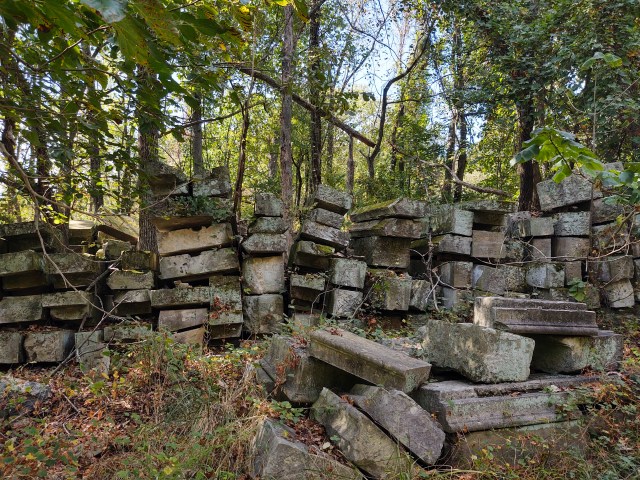
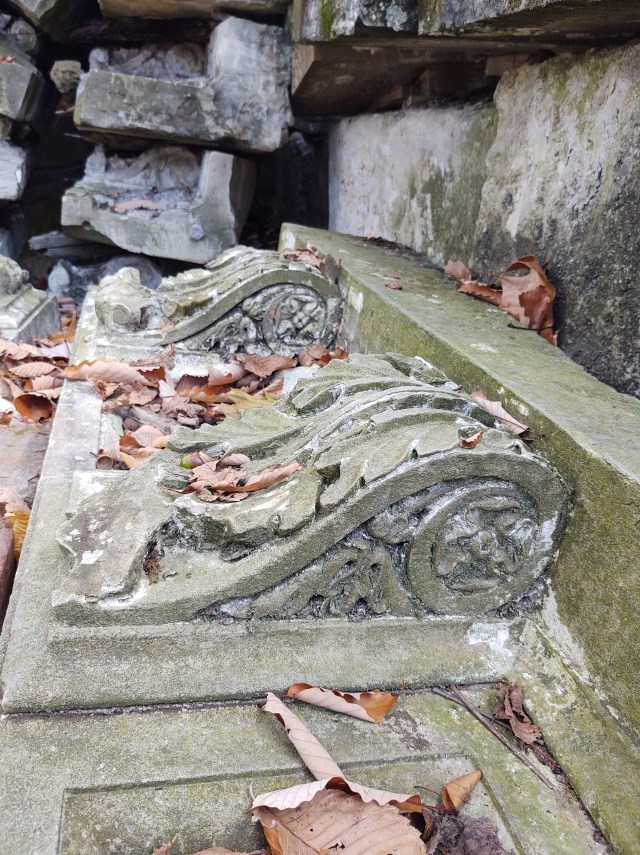
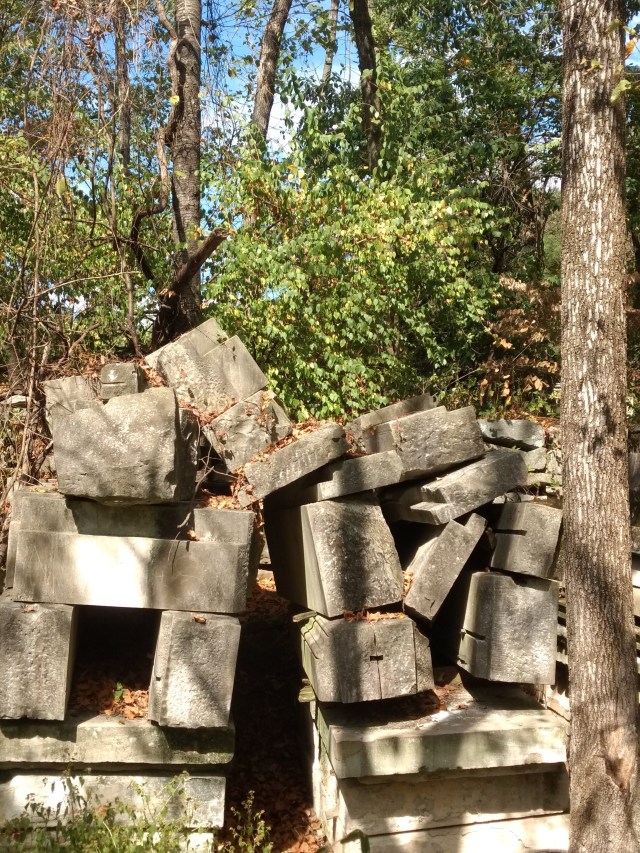
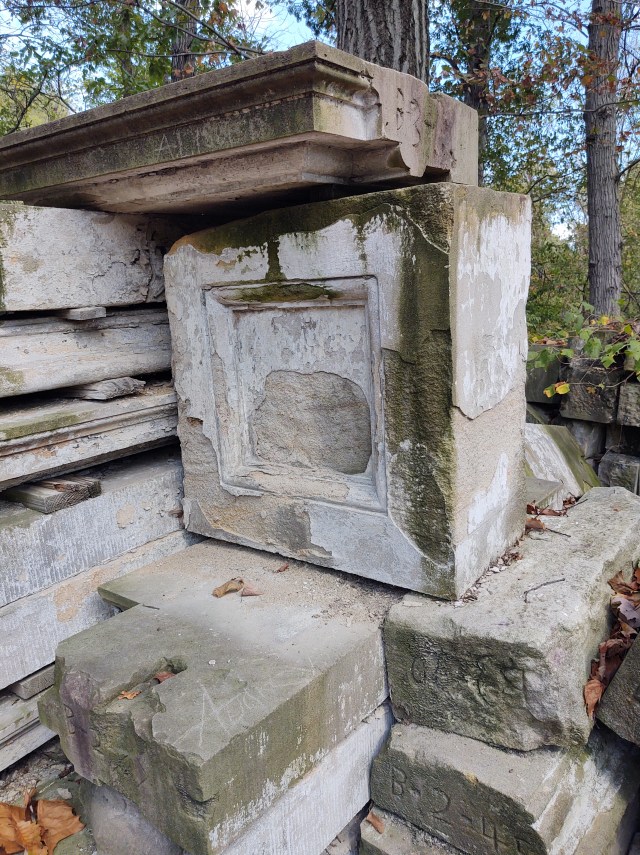
Capitol Stones: We came to Rock Creek National Park, just outside of DC, in search of the Capitol Stones. The Capitol Stones are the “discarded” Aquia Creek sandstone blocks, steps, columns, etc, that were removed in 1958 from the East façade of of the U.S. Capitol building (where Congress “lives”), and replaced with exact replica, Georgia White marble. Being the nerds that we are, we thought it remarkable that something with such historical significance would just be plopped out in the open to weather the elements. These discarded sandstone pieces have witnessed, and been a part of, our country’s history for going on 200 years. Imagine the stories they could (and actually can) tell. Hence, our quest.For a historical perspective, take a look at the US Capitol building’s timeline below, to get an idea of how significant these stones, stacked up behind a Park’s maintenance yard are.https://youtu.be/jmo-A_8HoOMThe thought to repurpose these hundreds of stones for a new museum, was brought up and then quickly “buried” by the Congressional architect William Steward (a one term Congressman, and NOT an architect by trade), who was already getting crap about the cost of the mammoth remodel. He had sold Congress on the “need” for a remodel due to the cracking of the old sandstone façade. It is said that he also told the workers that he didn’t “care” where the Stones went as long as they were out of the city AND out of sight. So, they “dumped” (actually neatly stacked) them at Rock Creek National Park…behind what is now their maintenance yard. The original Capitol Columns, eventually ended up at the US Arboretum (another coming adventure). We parked next to Rock Creek Park’s Nature Center and made the short walk to the maintenance yard where we had to bushwhack around to the back to access the Stones. What a remarkable site.

Rows of often 10ft tall “walls”, of once magestic Stones stacked one upon another, in varied conditions, cover an area roughly the size of an Olympic size pool.

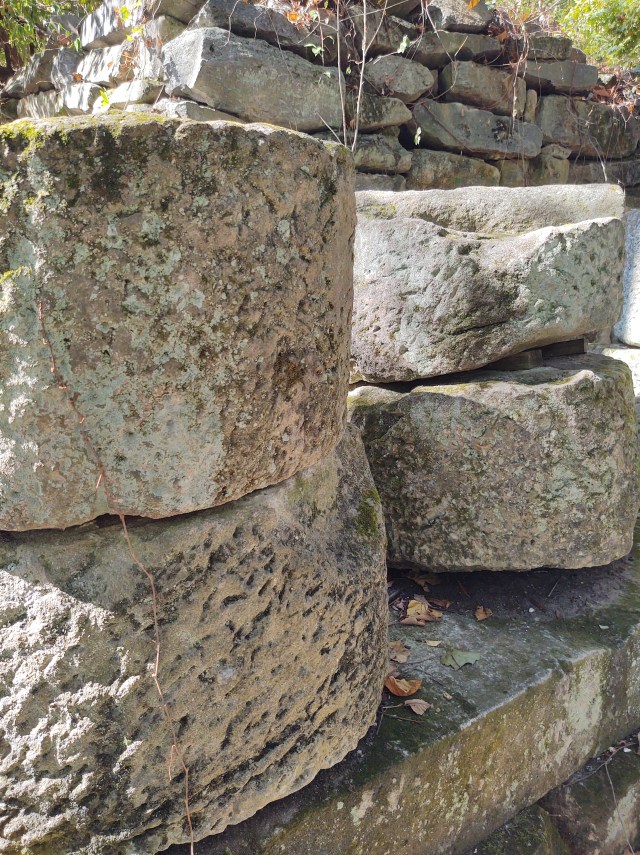
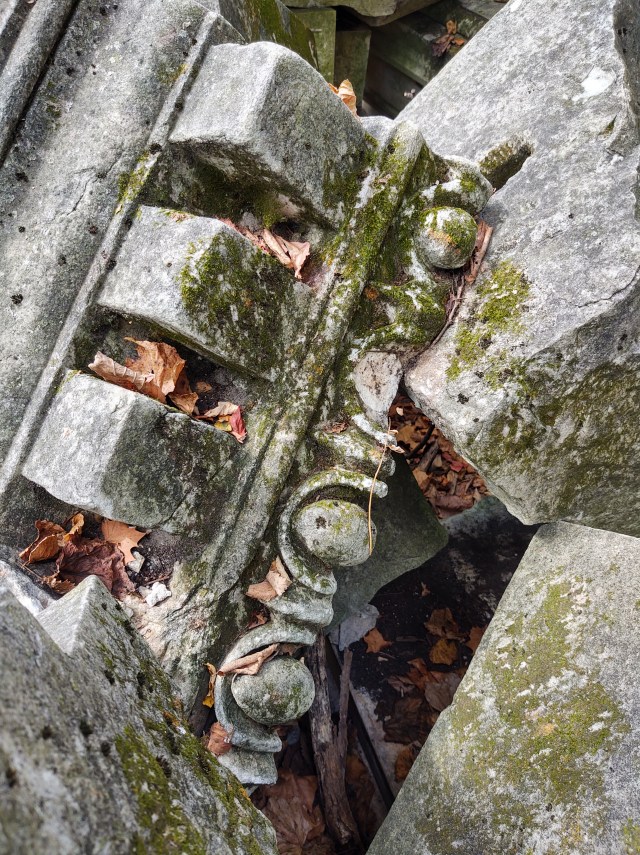
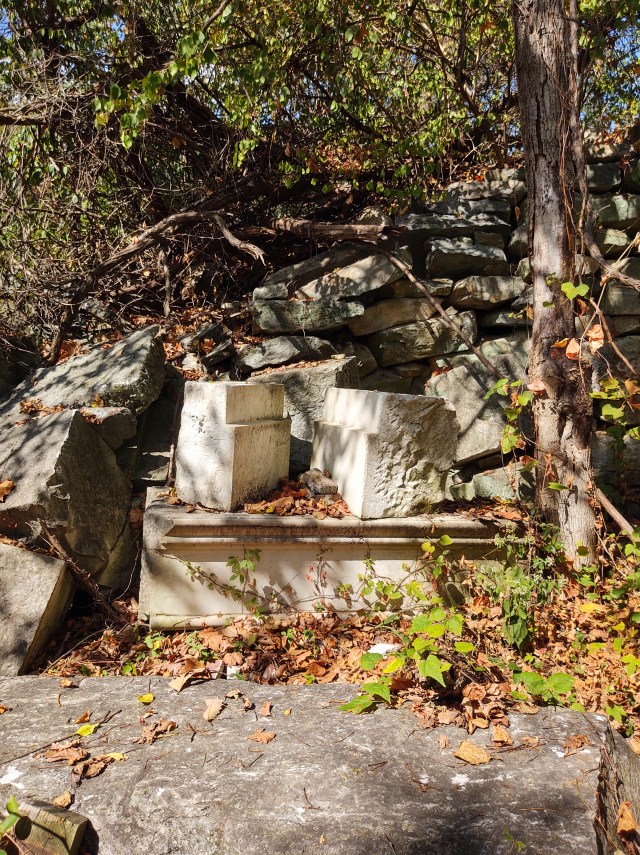
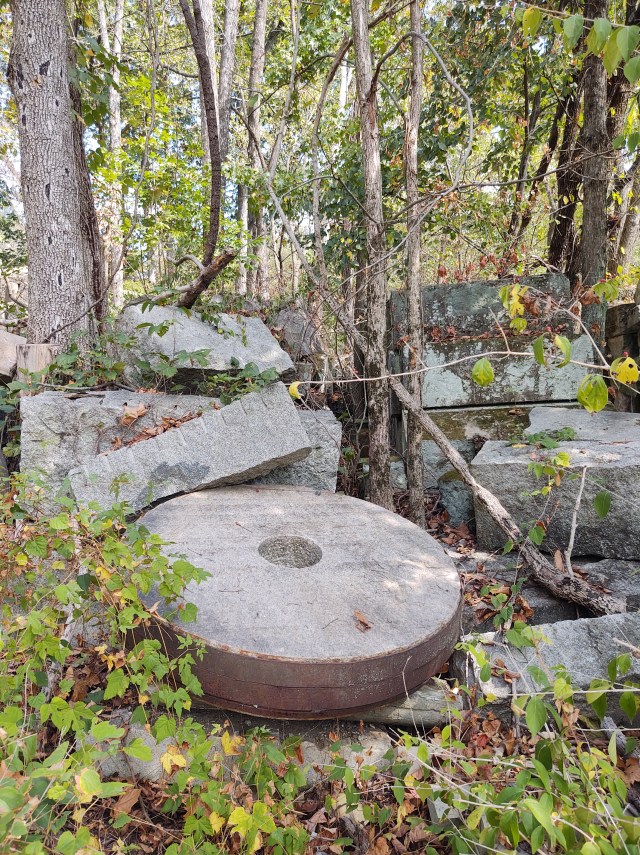
Some of these Stones are in pristine condition, while others are covered in faint green moss and/or blotches of lichen. As evidenced by the encroaching vegetation, it will not be long before the bulk of these Stones are swallowed up and “buried” by the surrounding vegetation’s natural tendencies.

We wish we had done a bit more research so that we could better “place” the Stones (in relation to the dismantled façade) we were viewing.

As I write this, we are continuing to research the “life” of these Stones. In fact, some of this cache of Stones have been used for restoration projects at the US Capitol and the Whitehouse. After wandering through and examining the Stones, we exited the cache and followed a well worn path to the Park’s “pink” blaze trail that would take us through some of the original and remaining “old growth” forest, which has been protected since 1890, when the land was set aside and the Park was created.

Rock Creek Park is an island of nature within the DC urban sprall, and holds a treasure trove of natural, cultural and archaeological history within its 1754 acres. Two interesting factoids, to wet your appetite. (1) Theodore Roosevelt was know to take many a walk through this Park over 100 years ago. And (2), lest we not forget, the mysterious murder and discovery of Congressional Intern, Chandra Levy’s decomposed body, was found in this Park in 2002. Nevertheless, our intension on this 4 mile or so hike was to see the Miller Cabin, one of the historic structures within the Park, but somehow (and not surprising) we missed a turn and ended up on the opposite site of the wide and cold creek, where the restored cabin stands. Somewhat famished, we bailed on figuring out another way to see this site in favor of heading to Old Alexandria for some much needed nourishment.

And while we would have loved to wandered this historic town, we had school age kids to get back to.

Posted in DC Adventures, Exploring Washington DC, International Spy Museum, Mini Adventures, National Parks, Side Trips, Uncategorized | Tagged , , , , , , , , | Leave a comment